How do I catch roof leaks early?
Look for the signs before water reaches a ceiling. Check the attic from the hatch for damp insulation, dark wood and mold, walk the yard after storms for loose shingles and overflowing gutters, and watch ceilings for new stains. Have a licensed roofer inspect the roof itself each spring or fall and after severe weather.
Free to ask. Local shops send quotes, and you pay only when you book one.
By Kasra Taheri, Founder, LoclisPublished
Researched and drafted with AI, then checked claim by claim against the sources listed below before it was published. Prices and rules change; the dates beside each source say when it was last checked.
This is a job for a licensed pro in Virginia
This page explains what the work involves, the permits, what a licensed pro does and what drives the cost. It does not give step-by-step instructions, because this work needs a licence, a permit or both, and doing it wrong can injure someone. Before you hire, check the licence on Virginia's DPOR record.
You catch roof leaks early by checking the places that show water first, on a schedule: the attic, the ceilings, the edges of the roof from the ground, and the gutters. Then have a licensed roofer look at the roof itself once a year and after severe weather. Most small leaks announce themselves weeks before they stain a ceiling.
Check the attic twice a year
An attic is the best early-warning system a house has. From the hatch, with a flashlight, look at the underside of the roof deck and at the insulation. The U.S. Department of Energy lists these as signs of possible water intrusion:
- Wet insulation in the attic, especially near the eaves[1]
- Mold or mildew on attic surfaces[1]
- Warped or rotting wood in the attic[1]
Look around chimneys, plumbing vents and any skylight, because those are where roofs tend to leak. DOE names Leaks in the roof or improperly installed flashing around chimneys and other roof penetrations[1] among the ways moisture enters an attic. What roof flashing is explains why. Do not step between joists or onto insulation; stay at the hatch or on a floored area.
Read the outside from the ground
You do not need to be on the roof to see trouble coming. Walk around the house after a storm and look up. DOE's signs outside include Bubbled paint at fascia boards or soffits[1] and Worn or warped shingles at roof edges.[1] Shingle pieces in the yard, a lifted edge, a bent drip edge or a pipe boot that has cracked all deserve a call. Signs of hail or wind damage on a roof lists what to look for. Binoculars from the ground help.
Keep gutters flowing
Water that spills over a gutter wets the fascia, soffit and the lowest course of shingles. Fairfax County's soil and water conservation district advises you to Inspect the outside of the gutters and downspouts for streaks or watermarks,[3] which show they overflow in rain. It adds: Gutters should be cleaned free of debris at least once a year. This should be done more frequently if you have trees close to your house.[3]
Cleaning gutters means a ladder, so hire it out if you are not steady on one. A loose or leaking joint is a smaller fix, covered in how to fix a leaking gutter seam. In winter, watch for ice at the eaves: DOE lists Ice dams in roof gutters causing water to seep under shingles and leak into the house,[1] and how to prevent ice dams explains what drives them.
Look at ceilings and walls
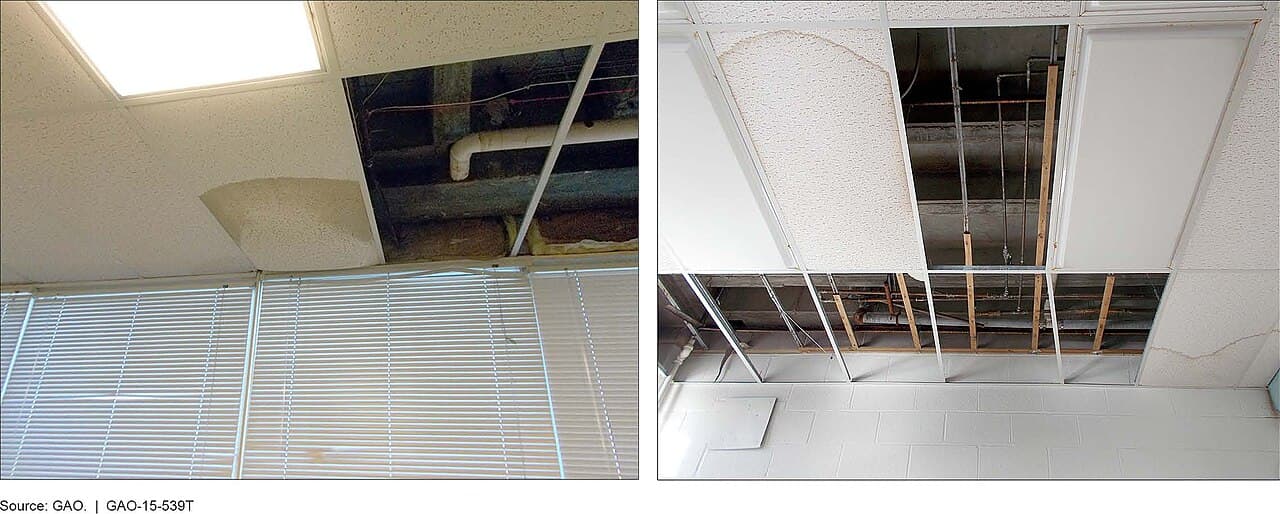
Check the top-floor ceilings, closets under the roof and the walls beside the chimney after heavy rain. A faint ring, a patch of bubbled paint or a musty smell is often the first sign. Mark the edge of any stain in pencil with the date, so you can tell later whether it is growing. If one appears, how to find where your roof is leaking explains what to note, and what to do when your roof starts leaking covers the first hours.
Schedule a professional inspection
The roof surface, flashing and sealant are best judged from above. Roofing manufacturer Elevate (Amrize) recommends that its roofing systems be inspected twice annually (usually in the spring and fall), as well as after severe weather events.[2] That guide is written for the company's commercial systems, but the rhythm is a useful model for any roof. The same guide tells owners to keep a record of all inspection and maintenance activities on your roof, including associated photos and invoices.[2] A simple folder or note on your phone does the job.
Ask the roofer for photos of what they see, including anything they would watch rather than fix now.
When to call a licensed pro
Call as soon as something looks off, rather than at the next rain. PNNL's roofing guidance says: Roofing should be inspected and installed by a professional roofing contractor, licensed and insured.[4] In Virginia, DPOR says that if the work you are considering is valued at $1,000 or more, a valid Virginia Contractor's License is required for the license category in which the contractor is to work.[5] Check the licence on DPOR's lookup, and read who to call for a roof leak for how to compare roofers.
Browse more roofing answers or roofing businesses. When you are ready, ask for a roof inspection or repair quote and licensed local roofers will respond.
Common questions
- How often should a roof be inspected?
- Roofing manufacturer Elevate recommends twice a year, usually spring and fall, and after severe weather, for its commercial systems. Many homeowners follow the same rhythm, with a licensed roofer doing at least the yearly inspection and the homeowner watching from the ground and from inside in between.
- What are the first signs of a roof leak?
- Often not a drip. The Department of Energy lists wet insulation near the eaves, mold or mildew on attic surfaces, warped or rotting wood in the attic, bubbled paint on fascia boards or soffits, and worn or warped shingles at roof edges. A new brown ring on a ceiling or a musty smell after rain are the signs most people notice first.
- Should I check the roof myself?
- Look at it from the ground, with binoculars if needed, and from the attic hatch. Do not climb onto it. A fall is the main danger, and a roofer can see flashing, sealant and the deck from above.
- Do gutters affect roof leaks?
- Yes. Gutters that overflow wet the roof edge, fascia and soffit, and in winter clogged gutters feed ice dams. The Department of Energy lists ice dams in roof gutters causing water to seep under shingles and leak into the house as a way moisture reaches an attic.
- What should I do after a storm?
- Look from the ground for shingles on the lawn, lifted edges, bent gutters or exposed flashing, check ceilings and the attic once the rain stops, and take dated photos. If anything looks off, book a licensed roofer rather than waiting for the next rain.
Sources
- [1] Guide to Durable Attics, U.S. Department of Energy. Checked October 28, 2026.
- [2] Elevate Roofing System Maintenance Guide (Version 5), Amrize (Elevate roofing systems). Checked October 28, 2026.
- [3] Gutters and Downspouts: Wetness or Erosion Problems, Northern Virginia Soil and Water Conservation District, Fairfax County. Checked October 28, 2026.
- [4] Asphalt Shingle Roofs, Building America Solution Center, Pacific Northwest National Laboratory for the U.S. Department of Energy. Checked October 28, 2026.
- [5] What You Should Know Before You Hire a Contractor, Virginia Department of Professional and Occupational Regulation, Board for Contractors. Checked October 28, 2026.
Want a pro to handle it?
Describe the job once. Licensed local businesses send quotes, and you pay only when you book one.
Get a quote for Roofing