Why won't my tiller start after sitting all winter?
Old gasoline is the usual cause. Fuel can start to degrade in as little as 30 days, and ethanol blends can separate and leave water in the tank and carburetor. Disconnect the spark plug wire, drain the old fuel, refill with fresh gasoline, then check the air filter and spark plug. A carburetor that stays clogged needs a shop.
Free to ask. Local shops send quotes, and you pay only when you book one.
By Kasra Taheri, Founder, LoclisPublished
Researched and drafted with AI, then checked claim by claim against the sources listed below before it was published. Prices and rules change; the dates beside each source say when it was last checked.
Step by step
Read when to stop and call a pro, further down this page, before you start.
Step 1: Disconnect the spark plug wire
Do this before any troubleshooting so the engine cannot fire while your hands are near the tines.[4]
Step 2: Check the basics
Confirm there is fuel in the tank, the fuel valve is open, the choke and throttle are set as the manual says for starting, and the oil level is right.[1]
Step 4: Clean or replace the air filter
A dirty air cleaner can restrict air; clean the element as your manual describes, or replace it.[1]
Step 5: Inspect the spark plug
Look for a fouled, wet or damaged plug and check its gap against the manual; replace it if it is worn.[1]
Step 6: Reconnect the plug wire and try again
Start outdoors with fresh fuel and the controls set for a cold start, keeping hands and feet clear of the tines.[1]
Start with the fuel
When a tiller refuses to start after a winter in the shed, the cause is usually the gasoline left in it. Briggs & Stratton puts the timing plainly: "Gas begins to degrade in as little as 30 days which can lead to your engine's fuel system clogging and your equipment not starting the following season."[2] Penn State Extension notes that "Engines that are rarely or seasonally used, such as lawnmowers or chainsaws, are especially prone to difficulties".[3] A tiller is exactly that kind of engine.
Ethanol makes it worse. Champion's tiller manual explains that "Ethanol-gasoline blends can absorb more water than gasoline alone."[1] It adds that "These ethanol blends can eventually separate",[1] leaving water or a watery goo in the tank, fuel valve and carburetor. That is why a tiller can look fine and still not take fuel.
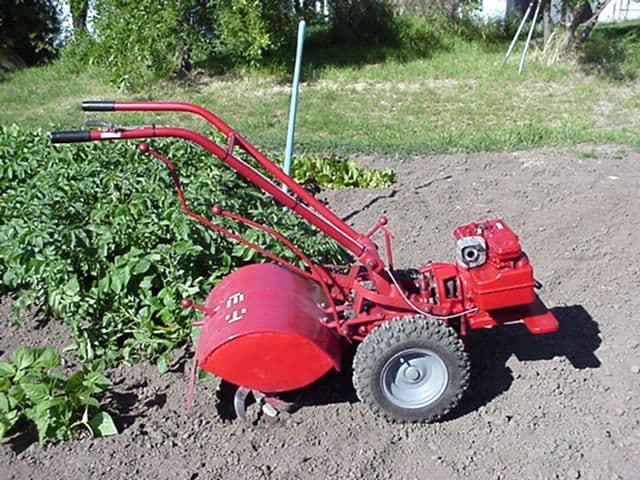
Disconnect the plug wire first
A tiller has tines that can turn the moment the engine fires. Virginia Cooperative Extension's rule for mowers applies to any small engine: "Disconnect the spark or electric plug before troubleshooting or repairing the mower."[4] Champion's manual states the hazard directly: "Rotating parts can entangle hands, feet, hair, clothing and/or accessories."[1]
What to check, in order
Work outdoors, on level ground, with the engine cool.
- Fuel. Champion's troubleshooting table lists the fix for an engine that will not start: "Stale gasoline. Drain fuel and add fresh fuel."[1] Drain the old gas into an approved container, wipe up any spills, and refill with fresh regular unleaded. If the old fuel looks cloudy or has water at the bottom, that confirms it.
- Fuel valve and fuel line. Make sure the valve is open. A stuck or clogged valve starves the engine; the same table lists "Fuel cock is clogged."[1]
- Oil. Check the dipstick with the tiller level. The manual says: "Always check the oil level before using."[1]
- Air filter. The table lists "Dirty air filter. Clean or replace filter."[1] Mice and dust like a tiller's air box over winter. Never run it without the filter: "Never run the engine without an air cleaner."[1]
- Spark plug. The table lists "Defective or incorrectly gapped spark plug. Inspect spark plug."[1] Pull the plug with the wire disconnected. A black, wet or cracked plug is cheap to replace; take the gap from your manual.
Then reconnect the wire, set the choke and throttle the way your manual says for a cold start, and pull. A tiller with fresh fuel often needs several pulls to draw it through the carburetor.
When fresh fuel does not fix it
If the engine still will not start, or starts and then dies, the carburetor is the usual next suspect. Champion's table lists "Float is damaged or sticking." among the fuel-system causes, and for a carburetor problem it says: "Carburetor out of adjustment. Contact Technical Support Team."[1] For "Dirt or water in fuel tank. Contact Technical Support Team." the advice is the same.[1]
Our guides cover what a gummed-up carburetor looks like: how to clean a small engine carburetor, why a small engine only runs with the choke on and when to take a small engine in for carburetor service.
Prevent it next fall
Most of this is avoidable. Add fuel stabilizer before storage, or empty the tank and run the engine dry. Penn State Extension's advice is: "Add fuel stabilizer if the equipment will be idle for more than a few weeks, and avoid keeping stored fuel for long periods of time."[3] The steps are in how to store a tiller for the winter.
Stop and call a pro if
- Fuel leaks from the tank, valve or carburetor when you drain it or when the engine runs.
- The recoil cord will not pull or the engine feels locked. Something inside may be seized.
- Fresh fuel, a clean filter and a good plug change nothing. The carburetor needs cleaning or rebuilding, which is shop work for most people.
- The tines or drive will not turn when the engine does run. That is a belt, clutch or transmission problem.
- Fuel or oil smell near a hot engine, or any smoke. Shut it off and let it cool.
Getting help in Virginia
Browse more small engine repair answers or find tiller repair pros near you. For a quote, ask the shop what is included: a carburetor clean, new plug and filter, and the fuel drained and replaced. If you still need the tiller for spring planting, say so, since shops are busiest then.
When you are ready, describe your tiller and local small engine shops can quote it.
Common questions
- How long can gas sit before a tiller will not start?
- Briggs & Stratton says gas begins to degrade in as little as 30 days. A tiller that sat from fall to spring is well past that, so fresh fuel is the first fix to try.
- Can I just add fresh gas on top of the old gas?
- It is better to drain the old fuel first. Champion's troubleshooting table for an engine that will not start says to drain stale gasoline and add fresh fuel, not to top it up.
- Why does ethanol gas cause trouble after storage?
- Champion's manual says ethanol-gasoline blends can absorb more water than gasoline alone and can eventually separate, leaving water or a watery goo in the tank, fuel valve and carburetor. Penn State Extension adds that seasonal engines are especially prone to difficulties.
- Do I need to clean the carburetor?
- Not always. Fresh fuel, a clean air filter and a good spark plug fix many cases. If it still will not run, or starts and then dies, the carburetor is the next suspect and a shop can clean or rebuild it.
Sources
- [1] Rear Tine Tiller Operator's Manual, model 201464, Champion Power Equipment. Checked October 28, 2026.
- [2] The Importance of Fuel Stabilizer, Briggs & Stratton. Checked October 28, 2026.
- [3] Fuel Ethanol: Hero or Villain?, Penn State Extension. Checked October 28, 2026.
- [4] Lawn Care: Rotary Mower Safety (BSE-42P), Virginia Cooperative Extension, Virginia Tech. Checked October 28, 2026.
Want a pro to handle it?
Describe the job once. Licensed local businesses send quotes, and you pay only when you book one.
Get a quote for Small Engines